
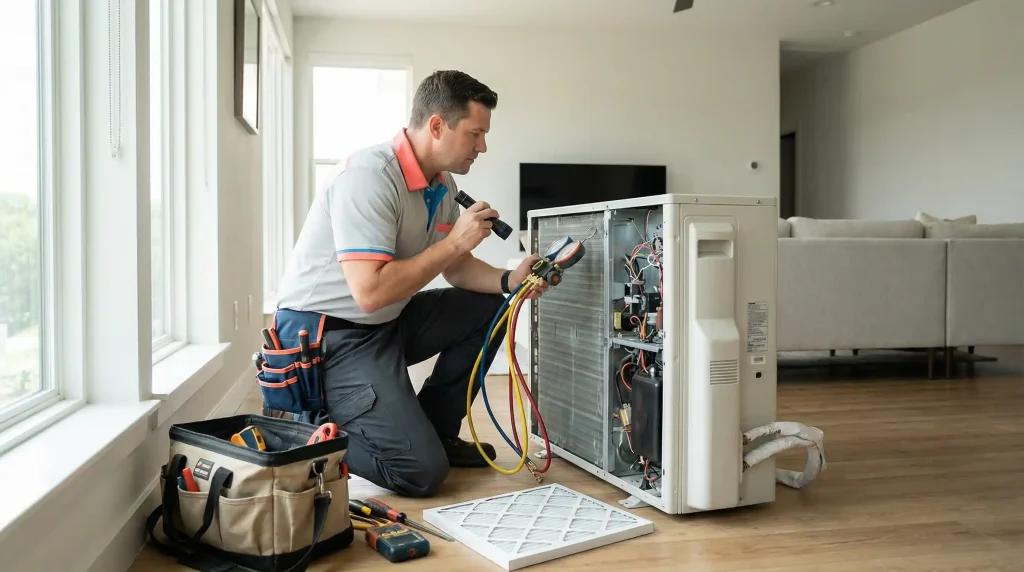
AC repair and maintenance in Dallas is about keeping cooling systems running through long summer operation, heavy daily use, dust buildup, refrigerant strain, and thermostat issues that show up when the heat does not let up. Homeowners here often depend on their air conditioning for extended months, so even a small problem can turn into uneven cooling, rising electric bills, or a system that quits during the hottest part of the week. Good service covers both sides of the job: fixing what is already wrong and catching wear before it turns into a breakdown.
Reliable AC service matters more in Dallas heat
Dallas homes do not get much of a break during cooling season. When the system runs day after day, parts wear down faster, airflow gets dirtier, and minor issues have more time to snowball. That is why emergency AC repair and residential AC maintenance often go hand in hand. One keeps the house livable when something fails. The other helps reduce the chances of being stuck without cooling in the first place.
A lot of calls start the same way. The house feels warm even though the thermostat is set lower. Air is coming out, but it is not cold enough. One room stays muggy. The outdoor unit sounds different. The system starts and stops too often. In many of those cases, the problem has been building for a while.
A system can struggle from several directions at once. Dust and debris can create airflow restriction. Low refrigerant can point to a refrigerant leak. A weak electrical component may need capacitor replacement. A frozen evaporator coil may be tied to poor airflow, dirty filters, or a refrigerant problem. Some homes deal with thermostat problems that cause poor cycling or temperature swings. Others are facing a compressor issue that is putting the whole system at risk.
In a climate like Dallas, those problems usually do not get better by waiting.
What AC repair and maintenance service actually covers
A proper service visit should focus on performance, condition, and the reason the system is struggling. For repair calls, that means finding the source of the issue instead of masking the symptoms. For maintenance, it means checking the system closely enough to spot wear before it affects comfort or reliability.
AC repair for common Dallas system problems
When a homeowner says the AC not cooling properly, that can mean several different things. It may be low refrigerant, a clogged drain, a dirty evaporator coil, a failing capacitor, weak airflow, a faulty thermostat, or something larger such as a compressor issue.
A repair appointment typically starts with system testing, temperature checks, electrical inspection, and a look at airflow and operating condition. The goal is to find out why cooling performance dropped and what needs to be corrected. Same-day AC repair can be especially important when the house is heating up fast and the system is no longer keeping indoor conditions manageable.
A good diagnosis also matters because symptoms can overlap. A frozen evaporator coil, for example, may look like one problem to a homeowner but can be caused by more than one underlying issue. If the source is missed, the same problem tends to come back.
Maintenance that helps reduce breakdown risk
Preventive maintenance is about keeping the system clean, tested, and ready for continued use. On a residential AC maintenance visit, a technician may inspect electrical connections, test components, check refrigerant condition, clear debris, inspect the condensate drain, review thermostat operation, and look for developing wear.
A seasonal tune-up is also a chance to catch issues that are easy to overlook in daily life. Weak airflow, unusual amperage draw, dirty coils, or early capacitor wear may not stop the system today, but they can set up a bigger repair later if left alone.
Routine system inspection matters more in Dallas because cooling systems often work hard for months at a time. The wear pattern is different when equipment is under regular heat stress.
Signs homeowners should not ignore before a breakdown happens
Some AC failures happen without much warning. A lot of them do not. Many systems give off early signs that something is off, but homeowners often keep putting it off because the unit still runs.
That usually gets more expensive.
Weak cooling or longer run times
If the system seems to run longer than normal or never quite catches up in the afternoon, it may be dealing with low efficiency, airflow restriction, refrigerant loss, or an aging component that is struggling under load.
Warm air from the vents
Warm or slightly cool air instead of steady cold airflow is a sign that should be checked. This can point to refrigerant issues, electrical faults, compressor trouble, or thermostat problems.
Ice on the indoor unit or refrigerant line
A frozen evaporator coil is never something to ignore. Ice buildup often means airflow is too low, refrigerant levels are off, or the system is running with another condition that should be repaired before damage gets worse.
Odd noises during startup or operation
Clicking, buzzing, humming, hard starts, or changes in outdoor unit sound can point to capacitor replacement needs, contactor wear, motor trouble, or a compressor issue. New sounds usually mean new wear.
Water around the indoor unit
A blocked condensate drain or another moisture issue can lead to water damage around the air handler. Even if cooling still works, the drainage side of the system should be checked.
Temperature swings from room to room
When one room stays warm while another gets cold quickly, that can point to airflow problems, duct issues, thermostat placement problems, or an AC system that is already losing performance.
Small warning signs tend to show up before the full shutdown. Catching them early often gives homeowners more options and less urgency.
Why delayed maintenance increases electricity cost
This gets missed on a lot of service pages, but homeowners feel it every month. Delayed maintenance often raises operating cost long before it causes a total breakdown.
When an air conditioner is dirty, restricted, low on refrigerant, or working with weak electrical parts, it has to run harder to do the same job. That means longer cycles, less efficient cooling, more strain on motors and compressors, and more power used over time.
A dirty filter alone can create airflow restriction that changes how the whole system performs. Coils that are coated with buildup transfer heat less effectively. A refrigerant leak can make the system run longer while still cooling poorly. A thermostat that is not reading or cycling correctly can keep the unit running when it should not. All of that shows up on the electric bill.
Dallas homeowners often run their AC heavily for extended months, so efficiency losses add up quickly. What looks like a small maintenance delay in spring can mean much higher power use all summer. That is one reason preventive maintenance has practical value even for systems that are still technically working.
The bill is often the first place the problem becomes obvious.
The link between maintenance and emergency repairs
No maintenance plan can promise that a system will never fail. Parts age. Weather is hard on equipment. Heavy use takes a toll. Still, many emergency AC repair calls are tied to issues that started earlier and were not caught in time.
Capacitors weaken gradually. Coils collect dirt over time. Drains do not usually clog in one day. Refrigerant does not disappear without a cause. Airflow problems build up. Electrical connections loosen. Thermostats drift or lose accuracy.
A seasonal tune-up gives the system a chance to be inspected before peak demand exposes every weak spot. That matters in Dallas because systems are often pushed hard once the real heat settles in. By then, the schedule fills up, the house gets uncomfortable fast, and a repair that could have been simple becomes urgent.
Repair now or wait for replacement?
This is a common question, especially with older systems. The answer depends on what failed, how the unit has been performing, and whether repair will solve the real issue or just buy a short window of time.
If the repair is minor and the system has otherwise been dependable, fixing it usually makes sense. If the unit has a history of poor cooling, repeated service calls, rising bills, and major component wear, it may be time to think beyond another short-term repair.
Either way, homeowners need a clear diagnosis. A repair visit should explain what failed, what condition the rest of the system is in, and whether there are signs of deeper wear that may affect future reliability.
What homeowners should expect from a real service visit
Good AC service should feel practical, not vague. Whether the call is for same-day AC repair or routine system inspection, homeowners should expect clear communication about what is wrong, what was checked, and what needs attention now versus later.
That means the system should be tested, not guessed at. Symptoms should be tied to actual causes. If there is a refrigerant leak, it should be addressed as a leak issue, not treated like a simple top-off and forgotten. If the system has a frozen evaporator coil, the underlying airflow or refrigerant problem should be identified. If a capacitor replacement is needed, the rest of the operating condition still matters too.
A strong maintenance visit should also do more than change a filter and leave. It should help the homeowner understand the system’s condition heading into heavy summer use.
FAQs about AC Repair and Maintenance in Dallas, TX
Why is my AC running but not cooling the house well?
When an AC is running but not keeping up, the cause could be airflow restriction, a refrigerant leak, a dirty coil, thermostat issues, or a larger compressor issue. Homes in Dallas often put heavy demand on the system, so weak performance tends to show up quickly during hot weather.
How often should I schedule AC maintenance in Dallas?
For most homes, a seasonal tune-up once a year is a smart baseline, ideally before the hottest stretch of cooling season. In homes with older systems, pets, dust concerns, or heavy usage, more attention may be helpful.
Is emergency AC repair available for sudden breakdowns?
Many companies offer emergency AC repair or same-day AC repair depending on schedule and parts availability. That can be especially important during peak heat when indoor temperatures rise fast and the system has stopped working altogether.
Can maintenance really help lower my electric bill?
It often can. Preventive maintenance helps the system run with better airflow, cleaner components, and fewer efficiency losses. In Dallas, where AC systems may run for long periods over extended months, delayed service can lead to noticeably higher electricity cost.
If your AC has started acting up or you want to stay ahead of mid-summer breakdowns, it helps to have the system checked before a small issue turns into a bigger repair.