
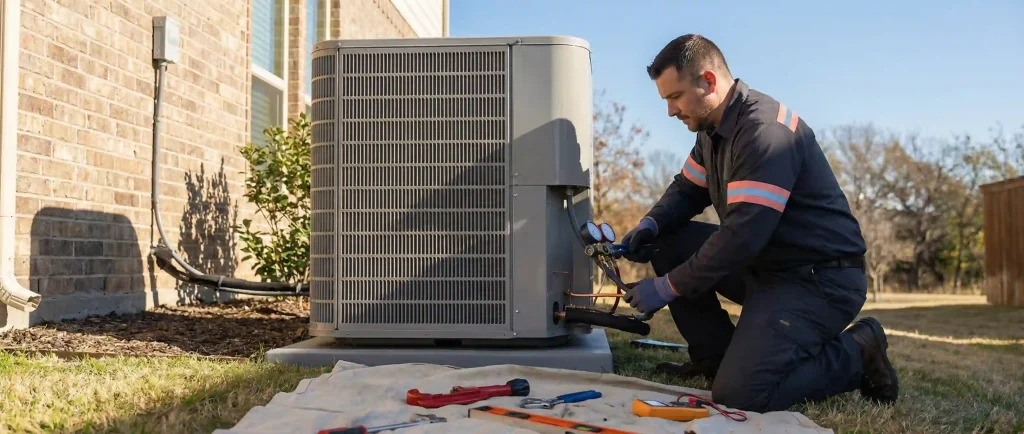
AC installation in Dallas includes much more than setting a new unit outside and turning it on. A proper install starts with evaluating the home’s cooling needs, square footage, insulation levels, airflow, and existing equipment so the new system is sized correctly and set up to run efficiently through long Texas summers. Homeowners in Dallas need professional sizing and installation because the wrong system, poor airflow, bad refrigerant charge, or an incomplete thermostat setup can lead to higher utility bills, uneven cooling, short cycling, and a system that wears out earlier than it should.
AC installation built for real Dallas heat
Anyone who lives in Dallas knows the cooling season is not short. Air conditioners here do a lot of heavy lifting, and that makes installation quality matter. A system that might perform fine in a milder climate can struggle during stretches of extreme heat, especially in homes with aging ductwork, poor attic insulation, hot west-facing rooms, or older thermostats that do not manage temperatures well.
That is why new AC installation is never just about the equipment itself. It is about how the full system works together inside the home. The condenser unit outside, the indoor air handler, refrigerant lines, drain setup, electrical connections, filters, airflow, and controls all have to be matched and installed correctly. If one part is off, the system can lose efficiency from day one.
For Dallas homeowners, that matters for comfort and cost. Long cooling seasons, high summer load, and utility efficiency concerns make it worth getting the installation done right the first time.
What a professional AC installation service usually includes
A solid residential AC installation process should be practical, thorough, and based on the home, not guesswork.
In-home evaluation and sizing
Before recommending equipment, a contractor should look at the layout of the house, insulation, sun exposure, ceiling height, existing return and supply vents, and total cooling demand. Proper sizing is one of the most important parts of central air installation. Bigger is not automatically better, and smaller is not cheaper in the long run if it cannot keep up.
System matching
The outdoor condenser unit and indoor air handler need to work together as a matched system. Mismatched equipment can reduce performance, increase wear, and create humidity problems inside the home. This is especially important during an HVAC system replacement, when part of the old setup may no longer be compatible with newer equipment.
Ductwork compatibility check
Ductwork compatibility often gets overlooked. If the duct system is leaking, undersized, poorly routed, or restricted, even a high-quality air conditioner can struggle. A new system should be evaluated with the ductwork in mind so airflow supports the equipment rather than fighting it.
Thermostat setup and controls
Thermostat setup is another part of the job that affects daily comfort. A new system should be configured correctly, tested, and explained to the homeowner. If the thermostat is not installed or programmed properly, the system can cycle poorly or fail to maintain steady indoor temperatures.
Start-up, testing, and final review
A professional install should also include full testing after startup. That means checking airflow, refrigerant charge, drain operation, system pressures, temperature split, and overall performance before the crew leaves. Homeowners should know how the system operates, when to change filters, and what to expect during the first days of use.
When it makes sense to install a new AC system
Some homes need a first-time central air installation. Others are dealing with aging equipment that is no longer dependable. In Dallas, replacing old AC unit setups becomes common after years of heavy seasonal use.
You may want to consider a new installation if:
- Your current system is breaking down repeatedly
- Cooling is uneven from room to room
- The unit runs constantly in summer without keeping up
- Utility bills keep climbing without a clear reason
- Repairs are stacking up on an older system
- Your current equipment uses outdated components or is poorly matched to the house
For many homeowners, the decision comes down to reliability. If you have already had multiple service calls and the house still does not feel comfortable, replacement may be the better investment.
Why correct AC sizing matters more than most homeowners realize
A lot of people assume an oversized system will cool the house faster and better. It sounds logical, but in real homes, that often creates expensive problems.
What happens when the system is too large
An oversized AC cools the home too quickly and shuts off before completing a full cycle. That short cycling can leave humidity behind, create uneven temperatures, and put extra strain on major components. The house may feel cold for a moment, then clammy later. Starts and stops also increase wear on the system, which can shorten equipment life and drive up repair costs.
Oversized systems usually cost more upfront too. So the homeowner pays more for equipment, then may still end up with less stable comfort and higher long-term operating costs.
What happens when the system is too small
An undersized system has the opposite problem. It runs too long, especially during peak Dallas heat, trying to reach the set temperature. That can raise utility bills, increase wear, and leave certain rooms warm all afternoon. The home may never feel consistently comfortable on the hottest days.
Why the long-term cost issue matters
Both oversized and undersized systems waste money, just in different ways. One cycles too much. The other runs too long. In both cases, homeowners deal with comfort complaints, reduced efficiency, and a system that may not last as long as expected. Proper sizing helps avoid those avoidable costs and gives the equipment a fair chance to perform as designed.
New equipment should fit the home, not just the budget sheet
There is always a price conversation with AC installation, and that is normal. But the lowest proposal is not always the best value if important steps are skipped. A lower quote may leave out duct improvements, electrical updates, thermostat replacement, drain corrections, or necessary system matching.
For homeowners in Dallas, energy-efficient cooling matters because the system will be used for a large part of the year. Even small setup mistakes can show up on monthly bills during summer. A carefully installed system has a better chance of delivering steady comfort and more predictable operating costs.
That is especially true during HVAC system replacement projects in older homes. Existing duct layouts, aging returns, insulation gaps, and attic heat can all affect how well the new unit performs. Installation should reflect those real-world conditions.
Same-day installation availability can help when the old system fails
Air conditioners do not always quit at a convenient time. During peak summer months, seasonal installation demand can rise quickly across Dallas, especially during long hot stretches when many homeowners are dealing with similar problems at once.
For homes with a failed system, same-day installation availability can be important, especially for families with young children, older adults, or anyone trying to avoid several days without cooling. Availability depends on equipment, scheduling, and the scope of work, but fast turnaround matters when indoor temperatures climb.
The key is still doing the job properly. Speed helps, but not at the expense of sizing, testing, or checking system compatibility.
What homeowners should ask before approving an installation
Not every estimate gives a clear picture of what is included. Before moving forward, it helps to ask practical questions:
Is the equipment being sized for my home?
The answer should involve more than a rough guess based on square footage.
Will you check my ductwork compatibility?
Airflow problems can reduce the performance of a brand-new system.
Are the condenser unit and indoor air handler matched?
A matched setup helps support efficiency, reliability, and proper operation.
Is thermostat setup included?
A new system should not be left with outdated or improperly configured controls.
What testing is done after installation?
The system should be started, checked, and verified before the job is considered complete.
Those questions are not about being difficult. They help homeowners understand the quality of the work behind the proposal.
Residential AC installation should improve comfort, not just replace equipment
A good installation should leave the home feeling more balanced, more dependable, and easier to cool. That can mean better airflow in back bedrooms, more stable temperatures in the afternoon, improved humidity control, or fewer constant adjustments at the thermostat.
In Dallas homes, those differences matter. The AC system is not a luxury feature for a few weeks out of the year. It is part of everyday livability for much of the season. When the installation is handled with care, the results show up in comfort, efficiency, and day-to-day peace of mind.
If you are planning a new AC installation or replacing old AC unit equipment in Dallas, a careful evaluation is the best place to start. A system that fits the home properly can make a noticeable difference from the first week forward.
FAQs about AC Installation in Dallas, TX
How long does AC installation take for a typical home?
Many residential AC installation jobs can be completed in one day, but timing depends on the equipment, the condition of the existing setup, and whether ductwork, electrical work, or drain changes are needed. A straightforward replacement usually moves faster than a first-time central air installation.
How do I know if I should repair or replace my current AC system?
If your system is older, struggles during peak summer temperatures, needs frequent repairs, or no longer cools evenly, replacement may make more sense. This is common when homeowners are replacing old AC unit equipment that has already been through several Dallas summers and is becoming unreliable.
Will a new AC system lower my electric bill?
It can, especially if the old unit was inefficient, oversized, undersized, or poorly installed. Energy-efficient cooling depends on more than the brand name. Proper sizing, ductwork compatibility, refrigerant charge, airflow, and thermostat setup all play a role in how the system performs.
Do I need to replace the thermostat when installing a new AC unit?
Not always, but it is often worth reviewing. Some older thermostats are not ideal for newer equipment. During a new AC installation, the thermostat should be checked for compatibility and set up correctly so the new system can operate the way it was designed to.If you want, I can also turn this into a stronger local SEO page format with meta title, meta description, schema-ready FAQ markup, and internal link anchors.